
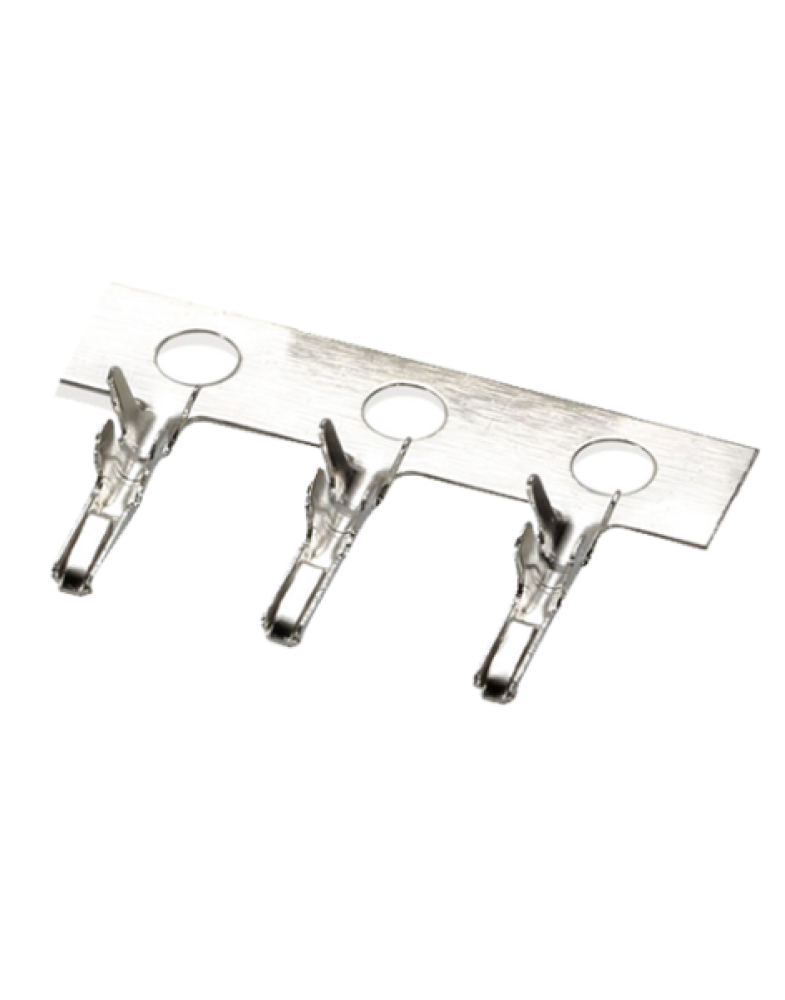
CJT Pins – Motor End
- Product Code: A1257-TP
- Availability: In Stock
-
£6.73
CJT Pins – Motor End
These motor-end pins from CJT Connectors are precision crimp or solder terminals designed for seamless integration into motor-end connector housings. They provide the essential interface between motor wiring and the connector housing, ensuring reliable electrical and mechanical performance under demanding conditions.
Key Features
-
Optimised for motor cable terminations — designed to mate with the motor-end connector housing, ensuring correct alignment and secure contact within power and signal circuits.
-
High quality metal alloys and plating — manufactured for excellent conductivity, corrosion resistance and consistent contact reliability over repeated connect/disconnect cycles.
-
Reliable mechanical retention — engineered to lock into the connector housing with secure retention to resist vibration and mechanical stress typically found in motor installations.
-
Versatile electrical capacity — compatible with moderate to high current applications when paired with appropriate connector housings and wiring harnesses.
-
Simplifies assembly and servicing — using these standard pins enables modular designs that make motor assembly, repair or replacement easier.
Technical Specification (Typical)
| Parameter | Description |
|---|---|
| Manufacturer | CJT Connectors |
| Terminal Type | Crimp-pin or solder-pin (depending on variant) |
| Material | High conductivity copper alloy |
| Plating | Tin, Nickel or Gold (variant dependent) |
| Current Rating | Suitable for motor-end power connections |
| Mechanical Retention | Lock-in form for connector housing |
| Compatible Housing | CJT motor-end connector series |
| Operating Environment | Standard industrial temperature and vibration |
Ideal Uses
-
Terminating motor phase or power cables into connector housings in robotics and automation systems
-
Motor drive units where a modular connector interface is required for quick motor replacement
-
High-performance motors where reliable and robust electrical contact is essential
-
Maintenance or retrofit of motor modules in electric mobility, industrial drives or robotic joints
-
OEM motor assemblies where standardised terminals improve production efficiency and quality control